Miss a DC booking window and you are not late. You are rebooked
Anyone who has sent freight into a major distribution centre knows the feeling. The truck is forty minutes behind. Forty minutes does not sound like much until you understand that the slot is gone, the next one is Thursday, and the promotion the stock was built for starts Tuesday.
Retail and FMCG freight is unusual in that being nearly on time is worth almost exactly nothing. The window either gets hit or the whole week moves.
That changes what you should be looking for in a carrier, and it is not the rate.
What DC delivery actually demands
The booking window, treated as a hard edge. Not a target. Arriving early can be as unworkable as arriving late, because there is nowhere to put you.
DIFOT that survives a bad week. Delivered in full, on time, is the number your customer’s category manager sees. Any carrier can post a good DIFOT in a quiet month. The useful question is what theirs looked like the week the highway shut.
Pallet and paperwork discipline. Wrong pallet type, bad wrapping, missing or mismatched documentation, and the load gets rejected at the gate having travelled the full distance. The freight was fine. The process was not.
Drivers who know the site. Big DCs have their own rules, their own gate process, their own expectations of conduct on the dock. A driver who has done it two hundred times gets unloaded. A driver who has not gets sent to the back.
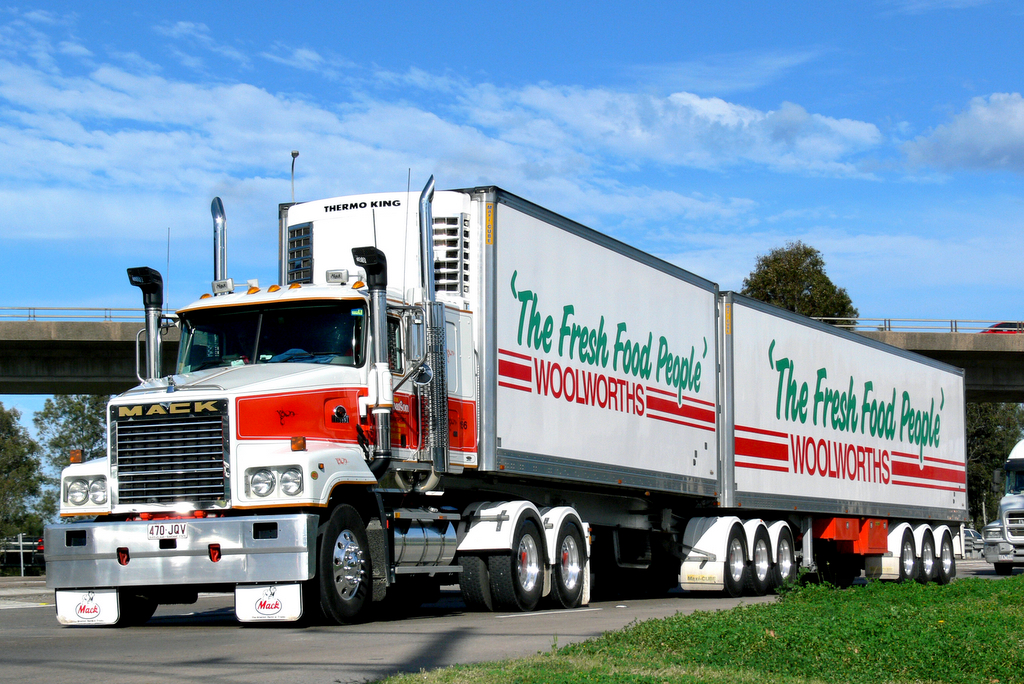
Temperature compliance where it applies. For chilled and frozen lines the window and the temperature are a single pass or fail, checked at the gate.
Why depot spacing protects a booking slot
Here is the part most carriers cannot offer, because it is infrastructure rather than intent.
Jim Pearson Transport runs six depots, five of them between Brisbane and Sydney: Larapinta, Chinderah, Grafton, Port Macquarie, Cundletown and Huntingwood. Sydney to Brisbane is about 11 hours of linehaul, and that road passes one of our sites roughly every two hours.
A breakdown or a delay on that corridor does not have to become a missed window. There is a yard, a fitter and another prime mover within reach, and a trailer can be picked up and carried on. One truck having a bad day stops being your problem and starts being ours.
That is also why changeovers work. The load keeps moving through the night while drivers hand over at depots and go home, which is better for the booking and considerably better for the person driving.
Capacity for when volume spikes
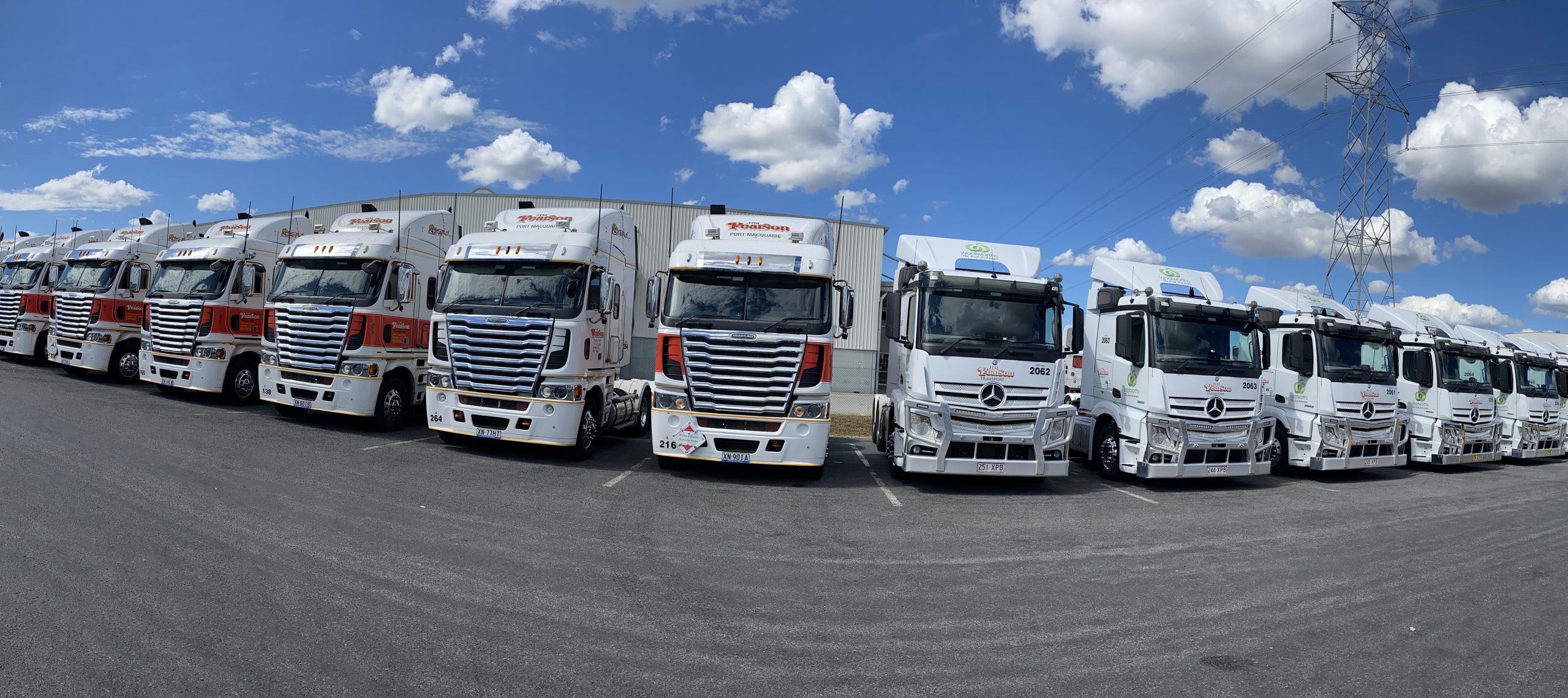
Close to 300 prime movers, towing mostly B-doubles and some B-triples, out of six depots, with more than 650 people behind them.
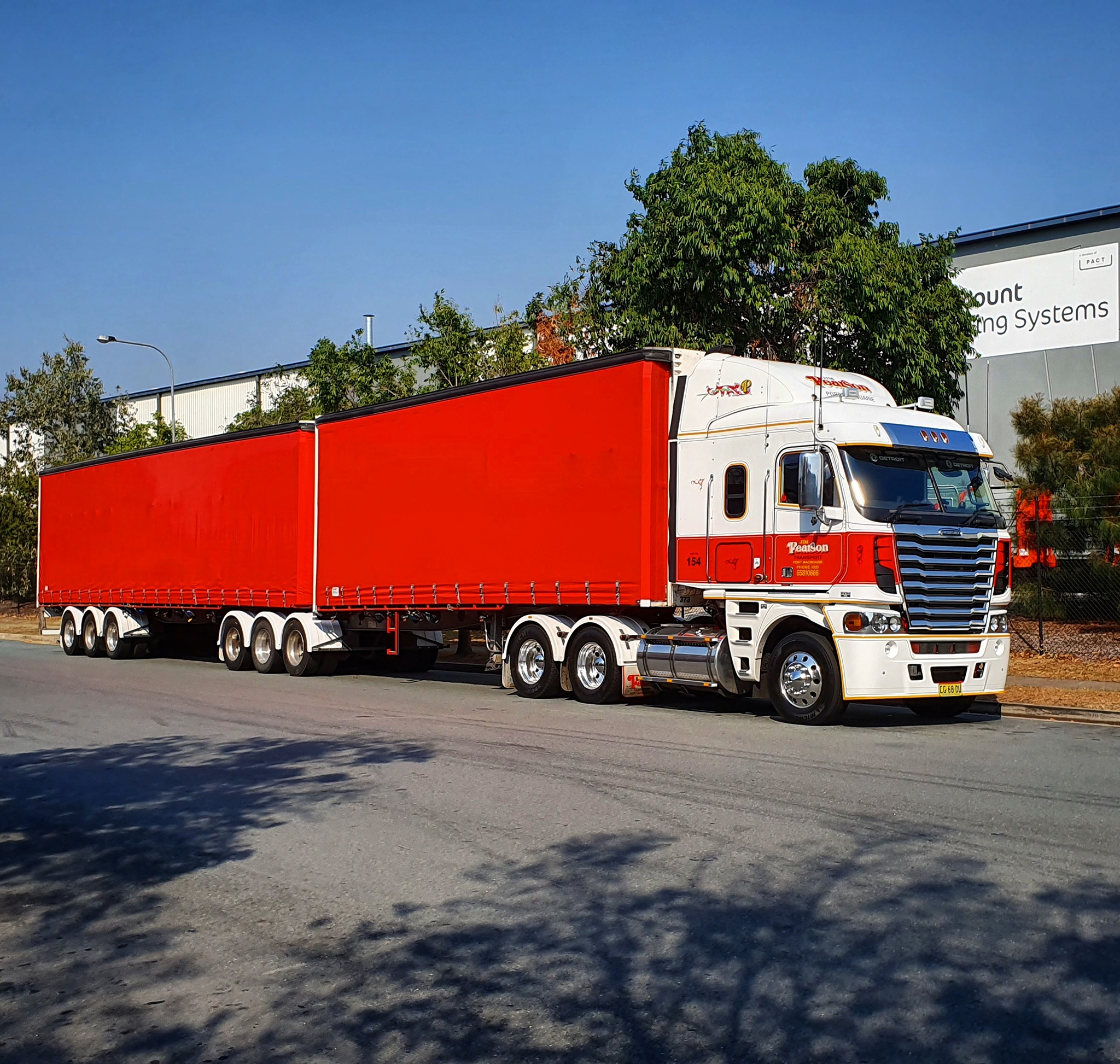
For retail freight, capacity is the thing that actually saves you. Price matters right up until the week your volume doubles for a promotion, or your incumbent cannot take the load, and then the only question is who has a truck. A B-double carries 34 to 40 tonne depending on configuration, so consolidating a lane onto them also means fewer movements to coordinate and fewer arrival windows to manage.
We already do this work
Jim Pearson Transport holds long-term contracts with a number of Australia’s leading food retailers and manufacturers. Primary Connect named us Large Carrier of the Year in 2014 and again in 2020.
Retail freight contracts are not won on a good quarter. They are kept by being boringly consistent for years, which is the only version of this work worth buying.
Get the numbers on your lane
Frequently Asked Questions
Yes. We hold long-term contracts with a number of Australia's leading food retailers and manufacturers, moving palletised retail and FMCG freight across New South Wales, Queensland and the east coast.
Five of our six depots sit between Brisbane and Sydney, so there is a yard and a replacement prime mover within about two hours of most of that corridor.
34 to 40 tonne depending on configuration.
Yes. We run general palletised freight and temperature-controlled freight for food and other sensitive product.
Latest News & Insights